
As the heat of summer settles in, I find myself searching for the perfect cool-down treat that doesn’t compromise on flavor. Enter Mango Sago—this delectable dessert combines the vibrant sweetness of ripe mangoes with the creamy richness of coconut milk and delightfully chewy sago pearls. With its refreshing qualities, this Mango Sago is your go-to choice for warm days and gatherings. What’s even better? You can whip it up in under 30 minutes, making it a fantastic option for those last-minute dessert cravings. Plus, with the flexibility of using fresh or frozen mangoes, you can indulge any time of year. Curious to know how to bring this tropical delight to your own kitchen? Let’s dive into the recipe!
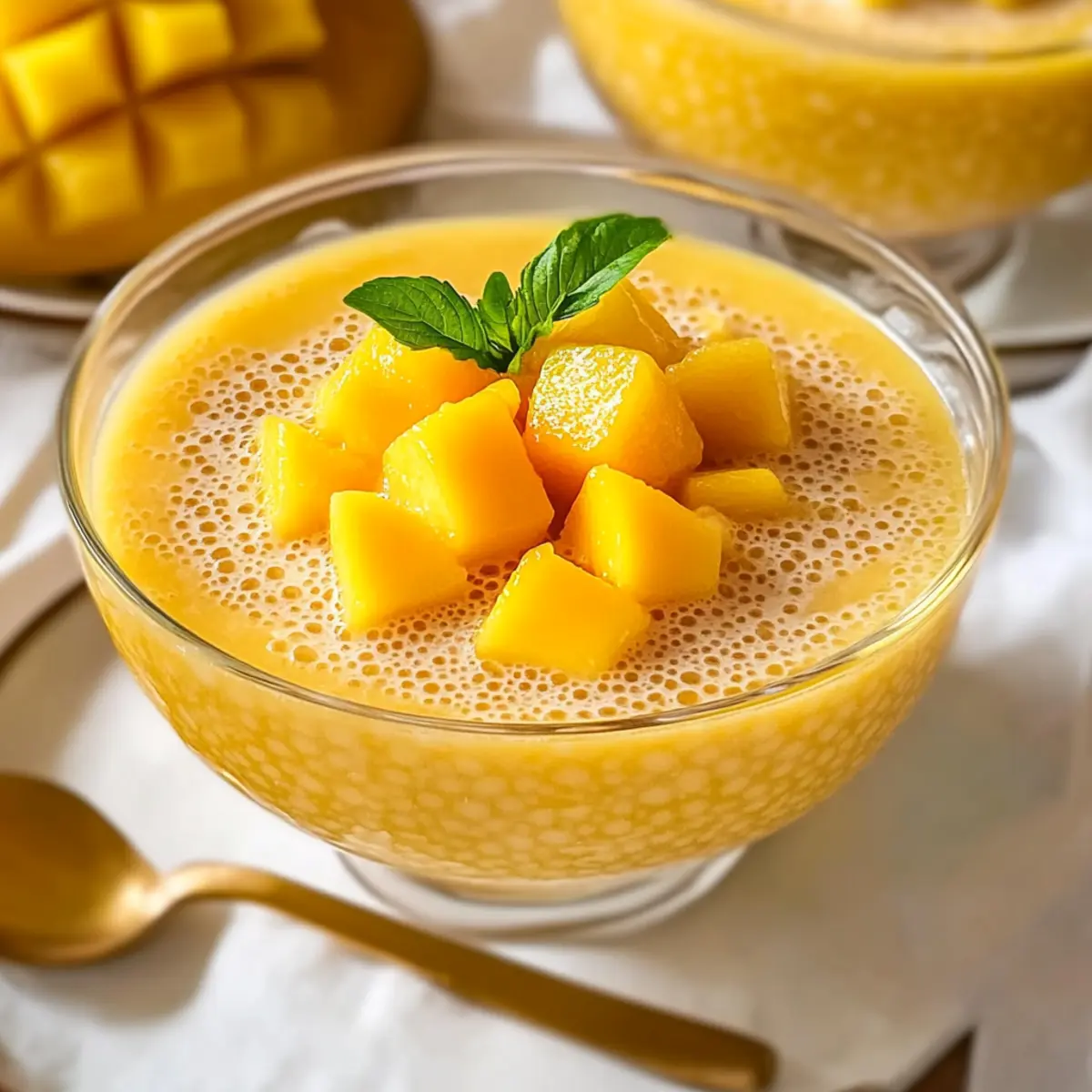
Why is Mango Sago a Must-Try?
Light and Refreshing: This dessert is a delightful way to beat the summer heat, combining creamy coconut milk with the natural sweetness of mangoes.
Quick to Prepare: Ready in just 30 minutes, it’s perfect for unexpected guests or a spontaneous treat.
Adaptable Ingredients: Use fresh or frozen mangoes for ultimate convenience! Just choose the best options based on what you have on hand.
Crowd Pleaser: It’s a family-friendly dessert; even kids will love its fun textures and vibrant colors!
Cultural Delight: Enjoy the flavors of Hong Kong in your home while uncovering a beloved traditional dessert. Serve this Mango Sago alongside grilled meats or as a sweet end to casual meals for added enjoyment!
Mango Sago Ingredients
For the Sago Base
• Sago Pearls – These chewy pearls give the dessert its delightful texture; alternatively, larger tapioca pearls can add a twist.
For the Mango Mixture
• Mango (2-3 large) – This is the star ingredient; for the best flavor, opt for Ataulfo or Tommy Atkins mangoes, or use thawed frozen mangoes.
• Coconut Milk (1 cup) – Provides a creamy, tropical flavor; using full-fat ensures richness in taste.
• Evaporated Milk (½ cup) – Adds a luscious texture; you can use more coconut milk for a dairy-free Mango Sago.
• Condensed Milk (3 tablespoons) – Sweetens the dessert; adjust this to suit your sweetness preference.
Optional Toppings
• Coconut Jelly (1 cup) – Incorporates an extra layer of texture and sweetness; great for those who enjoy added crunch.
• Mango Jelly (1 cup) – Use this vibrant option for enhanced visual appeal and flavor.
Step‑by‑Step Instructions for Mango Sago
Step 1: Cook the Sago
Start by bringing a medium saucepan of water to a rolling boil over high heat. Add in the sago pearls and cook for about 15 minutes, stirring occasionally. You’ll know they’re ready when they turn translucent and slightly chewy. Once cooked, remove the saucepan from heat, cover it, and let the pearls sit for an additional 15 minutes to finish cooking.
Step 2: Cool the Sago
After the sago pearls have finished cooking, drain them in a colander and rinse under cold water to stop the cooking process. This step helps remove excess starch and prevents the pearls from sticking together. Next, transfer the pearls to a bowl of cold water to keep them cool and separate until you’re ready to incorporate them into your Mango Sago dessert.
Step 3: Blend Mangos
While the sago is cooling, peel and dice your ripe mangoes. In a blender, combine the diced mango with the evaporated milk. Blend until smooth and creamy, taking care to scrape down the sides if necessary. This mango mixture will be the flavorful base of your Mango Sago, so ensure it’s silky and well combined before moving to the next step.
Step 4: Combine Ingredients
In a large mixing bowl, combine the drained sago pearls, the mango puree you just blended, and any diced mango pieces. If you’re using optional toppings like coconut jelly or mango jelly, now is the time to stir those in as well. Add the condensed milk and coconut milk to the mixture, stirring until all ingredients are well combined for an even distribution of flavors and textures.
Step 5: Chill & Serve
Once everything is combined, cover the bowl with plastic wrap and chill the mixture in the refrigerator for at least 1 hour. If you’re in a hurry, you can serve it immediately over ice in individual cups. This Mango Sago dessert is best enjoyed cold, so make sure to let it chill for the right refreshing treat during warm summer days.
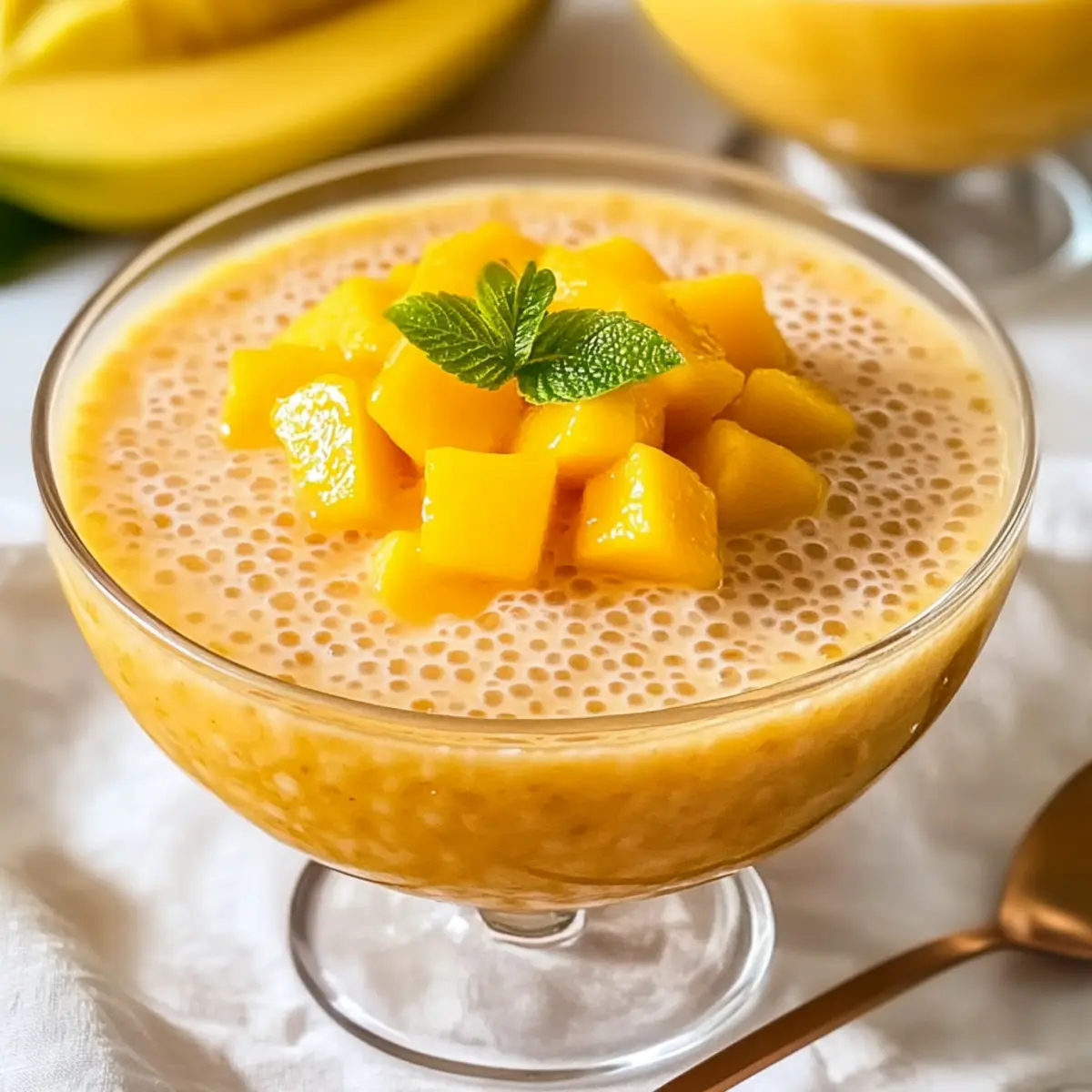
Make Ahead Options
These Mango Sago desserts are a fantastic option for busy home cooks looking to save time! You can prepare the sago pearls up to 24 hours in advance by cooking them as directed, then rinsing and storing them in a bowl of water to keep them separate in the refrigerator. The mango puree can also be blended and refrigerated for up to 3 days; just be sure to keep it in an airtight container to maintain its vibrant color and flavor. When you’re ready to assemble your Mango Sago, simply mix the chilled sago with the mango puree, coconut milk, and any optional toppings, then refrigerate for an additional hour before serving. This way, you’ll achieve that refreshing, delicious delight with minimal effort!
Expert Tips for Mango Sago
- Perfectly Cooked Sago: Ensure sago pearls are fully transparent and chewy; undercooked pearls won’t provide the desired texture for your Mango Sago.
- Balancing Sweetness: Adjust the condensed milk to taste; start with less and add more if needed to achieve your perfect sweetness level.
- Avoid Sticky Pearls: Rinse and soak sago pearls in cold water after cooking to prevent sticking. This is crucial for the best Mango Sago experience.
- Freshness Matters: Choose ripe, fragrant mangoes for the best flavor. If using frozen, thaw completely and blend until smooth.
- Storage Note: Store any leftovers in an airtight container in the fridge for up to 3 days, but avoid freezing to maintain the ideal texture.
What to Serve with Refreshing Mango Sago Dessert
Elevate your Mango Sago experience with delightful pairings that enhance its tropical flavors and refreshing character.
-
Grilled Chicken Skewers: The smoky flavors of grilled chicken complement the sweetness of mango, creating a perfect harmony on your plate.
-
Fresh Fruit Salad: A medley of seasonal fruits adds a burst of freshness and enhances the tropical essence of the Mango Sago. It’s light and vibrant!
-
Coconut Sticky Rice: This dessert maintains a delightful coconut theme and offers a satisfyingly chewy contrast to the creamy Mango Sago.
-
Lemon-Infused Iced Tea: A chilled glass of lemon iced tea cleanses the palate beautifully and adds a citrusy zing that pairs harmoniously with the dessert.
-
Chocolate Coconut Macaroons: Indulge your sweet tooth by pairing these chewy treats with Mango Sago for a delightful textural and flavor contrast.
-
Mango Mojito: This refreshing cocktail adds a zesty twist and keeps the tropical vibes flowing, making it perfect for a summer gathering.
-
Strawberry Shortcake: Layer the fresh berries with cream and sponge cake to balance the sweetness of Mango Sago, creating a delightful end to your meal. Enjoy the mixtures of textures!
-
Almond Cookies: These light, crunchy cookies provide a nutty flavor that complements the tropical notes in the dessert, making them a delightful pairing option.
Mango Sago Variations & Substitutions
Feel free to get creative with your Mango Sago—these fun variations will inspire your personal touch!
-
Dairy-Free: Substitute evaporated milk with additional coconut milk for an entirely creamy, dairy-free dessert.
-
Fruity Fiesta: Add diced pomelo or mixed berries for a colorful fruit medley that introduces a zesty splash of flavor.
-
Nutty Infusion: Stir in a tablespoon of almond or cashew butter for a smooth, nutty twist that enhances richness.
-
Texture Booster: Use larger tapioca pearls instead of sago for a different texture experience; they create delightful chewy bites.
-
Citrus Zing: Incorporate a splash of fresh lime juice to brighten the flavors; it beautifully balances the sweetness of mango.
-
Vegan Delight: For a fully plant-based Mango Sago, ensure all ingredients, including condensed milk, are vegan-friendly options.
-
Spicy Kick: Add a pinch of chili powder or sprinkle in some cayenne pepper for a surprising heat that will wake up your taste buds.
-
Sweetener Swap: Experiment with maple syrup or agave nectar instead of condensed milk for a unique sweetening option that adds a distinct twist.
By mixing and matching these variations, you can make your Mango Sago truly your own! For a refreshing hint of fun, serving alongside grilled meats or enjoying with friends will elevate your dessert experience to memorable gatherings. Don’t forget — these tweaks work wonderfully whether you’re using fresh or frozen mangoes!
How to Store and Freeze Mango Sago
Fridge: Store your Mango Sago in an airtight container for up to 3 days. This helps maintain its freshness and prevents it from absorbing odors.
Room Temperature: It’s best not to leave Mango Sago out for more than 2 hours, especially on warm days, to ensure food safety and quality.
Freezer: Avoid freezing Mango Sago, as the texture of the sago pearls may become unpleasantly grainy and watery.
Reheating: If serving chilled, there’s no need to reheat. Simply enjoy directly from the fridge or over ice for a refreshing treat.
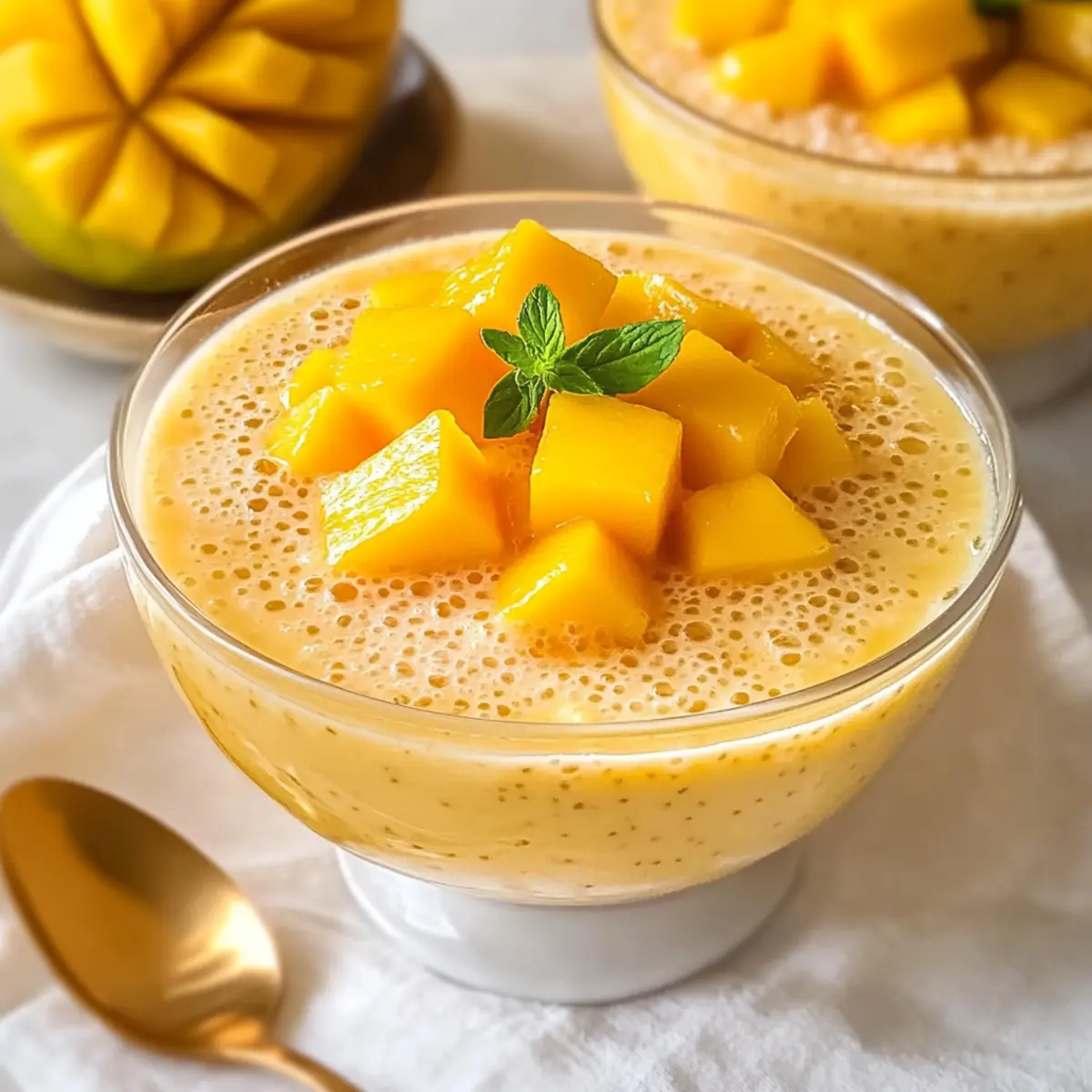
Mango Sago Recipe FAQs
How do I select ripe mangoes for Mango Sago?
Absolutely! For the best flavor, look for Ataulfo or Tommy Atkins mangoes. Ripe mangoes should be slightly soft to the touch and have a sweet aroma. If you only have frozen mangoes on hand, let them thaw completely before blending to ensure a smooth texture.
How should I store leftovers of Mango Sago?
Great question! Store your Mango Sago in an airtight container in the fridge for up to 3 days. This will keep it fresh and prevent it from absorbing other food odors. Just make sure to give it a good stir before serving, as some separation may occur.
Can I freeze Mango Sago?
I recommend avoiding freezing your Mango Sago. Freezing may alter the texture of the sago pearls, making them grainy and watery upon thawing. If you have leftovers, it’s best to enjoy them within a few days instead.
What should I do if my sago pearls are sticky?
No worries! If your sago pearls become sticky, rinse them thoroughly under cold water after cooking and transfer them to a bowl of cold water. This helps separate them and cools them down quickly, ensuring they don’t stick together in your dessert.
Is Mango Sago safe for people with dairy allergies?
Very much! You can easily make Mango Sago dairy-free by replacing evaporated milk with more coconut milk. Ensure that the condensed milk used is also dairy-free or substitute it with a plant-based sweetener based on your preference.
How do I serve Mango Sago for a party?
Absolutely! For a delightful presentation, serve Mango Sago in individual cups or small bowls. You can layer it with coconut jelly and diced mango on top for a beautiful and colorful dessert display that’s sure to impress your guests. Enjoy!
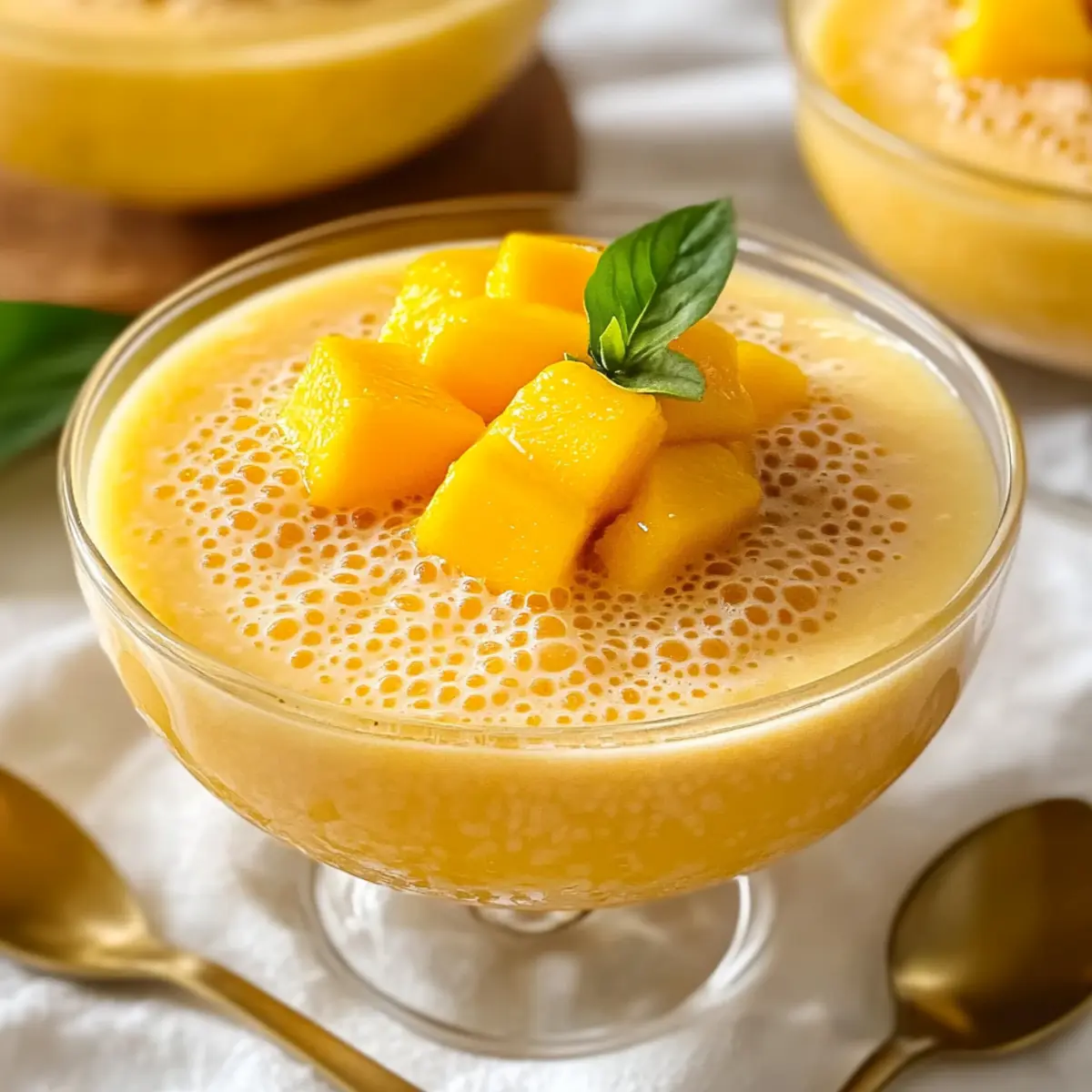
Delightful Mango Sago: A Refreshing Summer Dessert Treat
Ingredients
Equipment
Method
- Start by bringing a medium saucepan of water to a rolling boil over high heat. Add in the sago pearls and cook for about 15 minutes, stirring occasionally. You'll know they're ready when they turn translucent and slightly chewy. Once cooked, remove the saucepan from heat, cover it, and let the pearls sit for an additional 15 minutes to finish cooking.
- After the sago pearls have finished cooking, drain them in a colander and rinse under cold water to stop the cooking process. Transfer the pearls to a bowl of cold water to keep them cool and separate until ready to use.
- While the sago is cooling, peel and dice your ripe mangoes. In a blender, combine the diced mango with the evaporated milk. Blend until smooth and creamy.
- In a large mixing bowl, combine the drained sago pearls, mango puree, and any diced mango pieces. If using optional toppings like coconut jelly or mango jelly, stir those in as well. Add the condensed milk and coconut milk, stirring until all ingredients are well combined.
- Cover the bowl with plastic wrap and chill the mixture in the refrigerator for at least 1 hour. Serve chilled over ice if in a hurry.
Leave a Reply