
As I stood over the stove, the inviting scent of marinated beef wafted through the kitchen, conjuring fond memories of family dinners filled with laughter and warmth. If you have leftover bulgogi hiding in your fridge, let me introduce you to the magic of Quick Korean Beef Bulgogi Stew with Glass Noodles. In just under 30 minutes, you’ll create a hearty, one-pot dish that transforms those remnants into a rich, savory meal, perfect for cozy evenings or unexpected guests. Not only does this recipe save time and reduce waste, but it also packs a comforting punch of flavor that will leave everyone reaching for seconds. Intrigued? Let’s dive into this delightful culinary adventure!
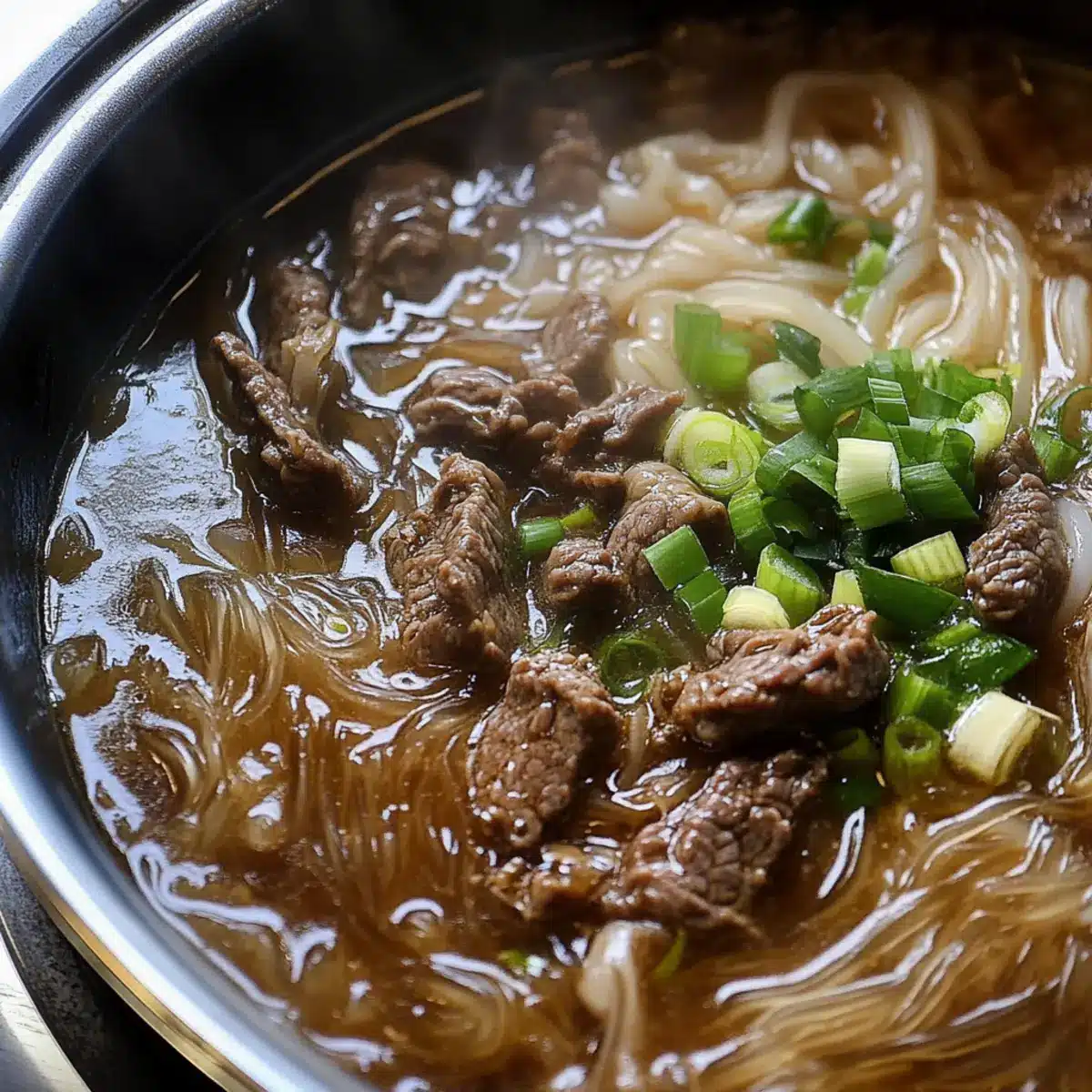
Why is this stew a must-try?
Quick and Easy: This recipe is perfect for those busy weeknights when you crave something delicious without the fuss. Ready in under 30 minutes, it’s a time-saver that doesn’t skimp on flavor.
Hearty Comfort: Each bowl brims with tender beef and chewy glass noodles, making it a filling meal that satisfies the heart and soul.
Versatile Adaptation: Got other leftovers? Feel free to throw in vegetables like bok choy or carrots! Check out our Korean Potato Cheese Pancakes for a fun twist on traditional flavors.
Rich Broth Flavor: The savory blend of soy sauce and sesame oil creates a depth of flavor that will warm you from the inside out.
Crowd-Pleaser: Whether you’re cooking for family or a small gathering, this stew is sure to impress and keep everyone coming back for more. Pair it with steamed rice or your favorite banchan for a complete experience!
Korean Beef Bulgogi Stew Ingredients
For the Stew
- Korean Beef Bulgogi – Provides a sweet-savory flavor base; using leftover bulgogi intensifies the dish’s richness.
- Sweet Potato Glass Noodles (Dangmyeon) – Offers a satisfying chew that absorbs the broth’s delicious flavors; substitute with rice noodles or udon for a different texture.
- Enoki Mushrooms – Adds a delicate, earthy taste and tender-crisp bite; shiitake mushrooms can work as a great alternative if needed.
- Green Onion – Infuses freshness and mild onion flavor, brightening the stew; regular onions can suffice in a pinch.
- Water – Acts as the broth base for melding the flavors; consider using beef stock for a deeper taste.
- Sesame Oil – Introduces a warm, nutty profile to the broth; feel free to omit if you’re looking for a lighter alternative.
- Soy Sauce – Balances the stew with umami and sweetness; tamari can be used for a gluten-free option.
Step‑by‑Step Instructions for Korean Beef Bulgogi Stew
Step 1: Soak the Glass Noodles
Begin by soaking the sweet potato glass noodles in warm water for about 15 minutes. This allows them to soften and prepare for their delightful texture in the stew. Once they’re pliable, drain them and set aside while you begin the cooking process.
Step 2: Heat the Bulgogi
In a medium pot over medium heat, warm your leftover Korean beef bulgogi for about 3-5 minutes until it’s heated through and slightly crispy. Stir continuously to ensure even warming and to enhance the savory aromas. This step is crucial for making the base flavors of your Korean Beef Bulgogi Stew vibrant.
Step 3: Add Seasonings
Once the beef is warmed, stir in 1-2 tablespoons of soy sauce and a teaspoon of sesame oil. Mix well for another minute, allowing the flavors to meld. The combination will create a mouthwatering foundation for the stew, inviting rich, savory notes that will permeate the dish.
Step 4: Incorporate the Broth
Next, pour in 4 cups of water or beef broth, bringing the mixture to a gentle boil over medium-high heat. This should take about 3-4 minutes. Keep an eye on it, and wait until you see gentle bubbles forming, indicating the broth is ready for the next ingredients.
Step 5: Cook the Noodles and Mushrooms
Once boiling, add the soaked glass noodles and 1 cup of enoki mushrooms to the pot. Stir gently and let them cook for 3-4 minutes, or until the noodles are tender and the mushrooms have softened. The broth will start to thicken slightly, enhancing the overall richness of your Korean Beef Bulgogi Stew.
Step 6: Garnish and Serve
After cooking, remove the pot from the heat and serve the stew hot in bowls. Top with chopped green onions for a fresh touch. This homemade Korean Beef Bulgogi Stew is now ready to be enjoyed, offering a delightful mix of textures and flavors perfect for a cozy meal.
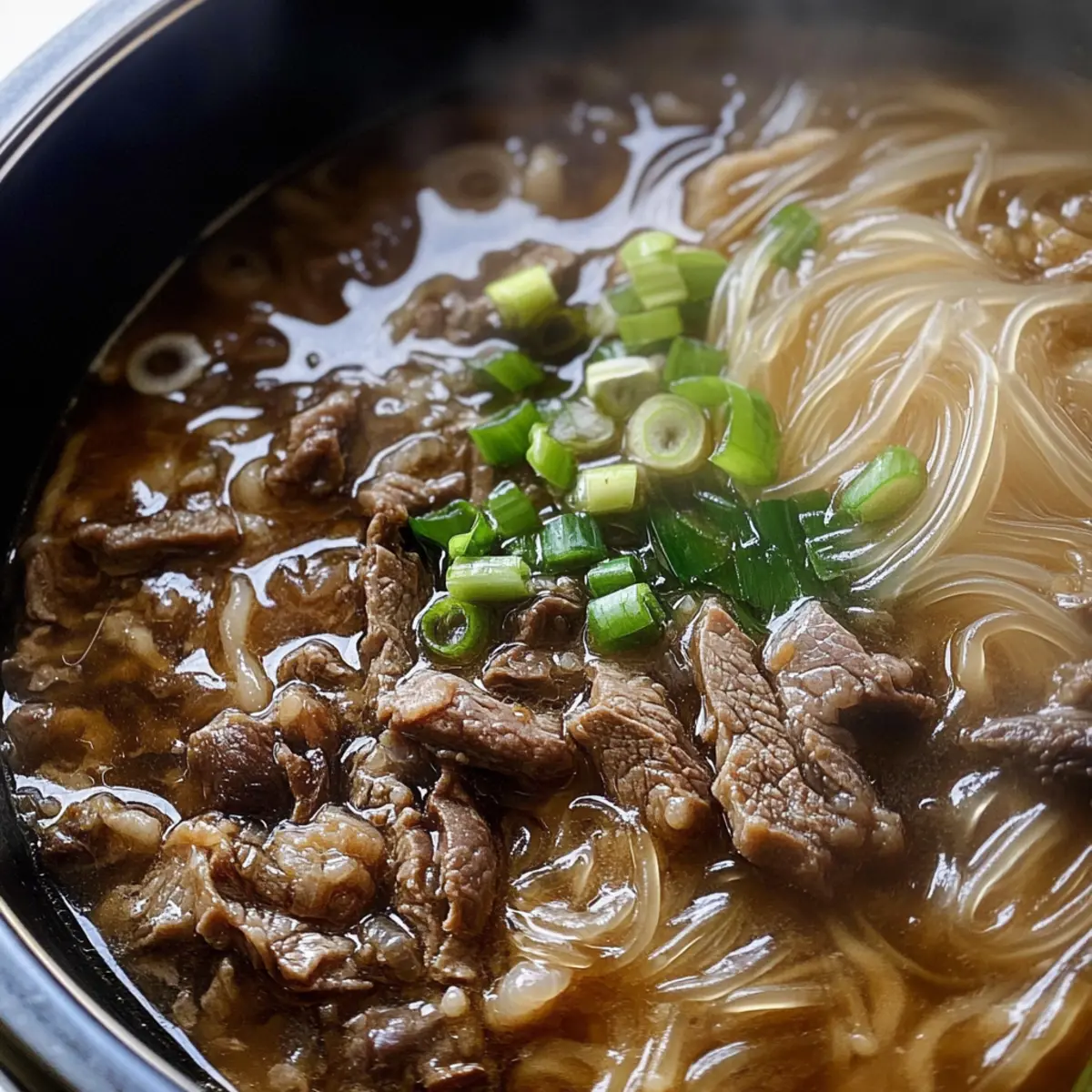
Korean Beef Bulgogi Stew Variations
Feel free to customize this comforting stew to suit your taste or dietary needs!
-
Vegetable Boost: Add bok choy, carrots, or napa cabbage for more nutrition and color. They’ll add a lovely crunch!
-
Noodle Alternatives: Swap sweet potato glass noodles for rice noodles, udon, or ramen for a different twist and texture. Experiment with what you have!
-
Spicy Kick: Incorporate sliced jalapeños or a splash of gochujang to turn up the heat. Your taste buds will thank you!
-
Gluten-Free: Use tamari instead of regular soy sauce to adapt this stew for gluten-sensitive guests. Enjoy the same great flavors with peace of mind!
-
Herb Infusion: Stir in fresh cilantro or basil before serving for an aromatic finish that elevates your dish. The fresh herbs add an uplifting note.
-
Creamy Twist: Add a dollop of coconut milk or heavy cream towards the end for a luscious, creamy soup base that enhances the stew’s richness.
-
Protein Variance: Swap beef bulgogi for shredded chicken or tofu for a lighter, yet just as satisfying dish; both options soak up the stew’s flavors beautifully.
-
Simplified Broth: For a lighter version, use vegetable broth instead of beef broth; this keeps it flavorful while being vegetarian-friendly! Check out our Slow Cooker Beef for a different take on hearty flavors.
Expert Tips for Korean Beef Bulgogi Stew
-
Leftover Love: Using leftover bulgogi enhances the flavor immensely; it’s where the magic happens! Freshly made bulgogi works, but leftovers are ideal for this stew.
-
Soaked Noodles: Make sure to soak the sweet potato glass noodles long enough; this prevents them from becoming mushy in the broth and preserves their delightful chewiness.
-
Broth Balance: Adjust the amount of water or broth to suit your preference; a richer broth can be achieved by adding less liquid or using beef stock instead of water for your Korean Beef Bulgogi Stew.
-
Veggie Boost: Feel free to add your favorite vegetables like bok choy or carrots for added nutrition and flavor; just ensure they’re cut small enough to cook quickly.
-
Garnish Matters: Don’t skip the green onions! They add a fresh pop of flavor. You can also include sesame seeds for an extra crunch and visual appeal.
What to Serve with Quick Korean Beef Bulgogi Stew
Transform your delicious stew into a full dining experience with these perfect pairings that evoke comforting warmth and delight.
-
Steamed Rice: Perfect for soaking up all that savory broth, tender rice complements the stew nicely while adding a satisfying starchiness.
-
Kimchi: The classic Korean side dish adds a spicy crunch that balances the stew’s richness, making each bite even more enjoyable.
-
Pickled Vegetables: Bright and tangy, these add a refreshing contrast to the stew’s flavors, awakening your palate with each spoonful.
-
Korean Potato Cheese Pancakes: These crispy, cheesy delights pair beautifully by offering a rich and indulgent side that everyone will love.
-
Sesame Green Beans: Lightly sautéed with sesame oil, these beans offer a bright, earthy crunch that complements the stew’s hearty flavors.
-
Chilled Soba Noodles: Drizzled with soy sauce and sesame oil, these provide a delightful upturn of flavor and a cool contrast to the warm stew.
-
Korean Pear Salad: This refreshing salad brings a sweet, crunchy contrast that balances the stew’s savory notes, enhancing the dining experience.
-
Soju or Makgeolli: Pair your meal with these traditional Korean beverages that elevate the flavors of your stew and add a festive touch.
These pairings create a warm, inviting table that delights the senses and nurtures the soul.
How to Store and Freeze Korean Beef Bulgogi Stew
-
Fridge: Store leftovers in an airtight container for up to 3 days. Keep the stew refrigerated to maintain flavors and freshness, and reheat gently before serving.
-
Freezer: For longer storage, freeze the stew in a freezer-safe container for up to 3 months. Allow it to cool completely before sealing to prevent freezer burn.
-
Reheating: When ready to enjoy, thaw overnight in the fridge and reheat on the stove over medium heat until warmed through. Add a splash of water if needed to restore the broth’s consistency.
-
Avoid Overcooking: Be careful not to overheat the glass noodles during reheating, as they can become mushy; cook just until warm. Enjoy your comforting Korean Beef Bulgogi Stew!
Make Ahead Options
These Quick Korean Beef Bulgogi Stew preparations are a lifesaver for busy home cooks! You can prepare the entire broth (water or beef stock with seasonings) up to 24 hours in advance and refrigerate it. Additionally, soak the sweet potato glass noodles and store them separately for optimal texture. When you’re ready to enjoy your meal, simply heat the broth until boiling, add the pre-soaked noodles and enoki mushrooms, and cook for about 3-4 minutes. This method ensures that your delicious Korean Beef Bulgogi Stew maintains its vibrant flavors and appealing textures, making mealtime both effortless and satisfying!
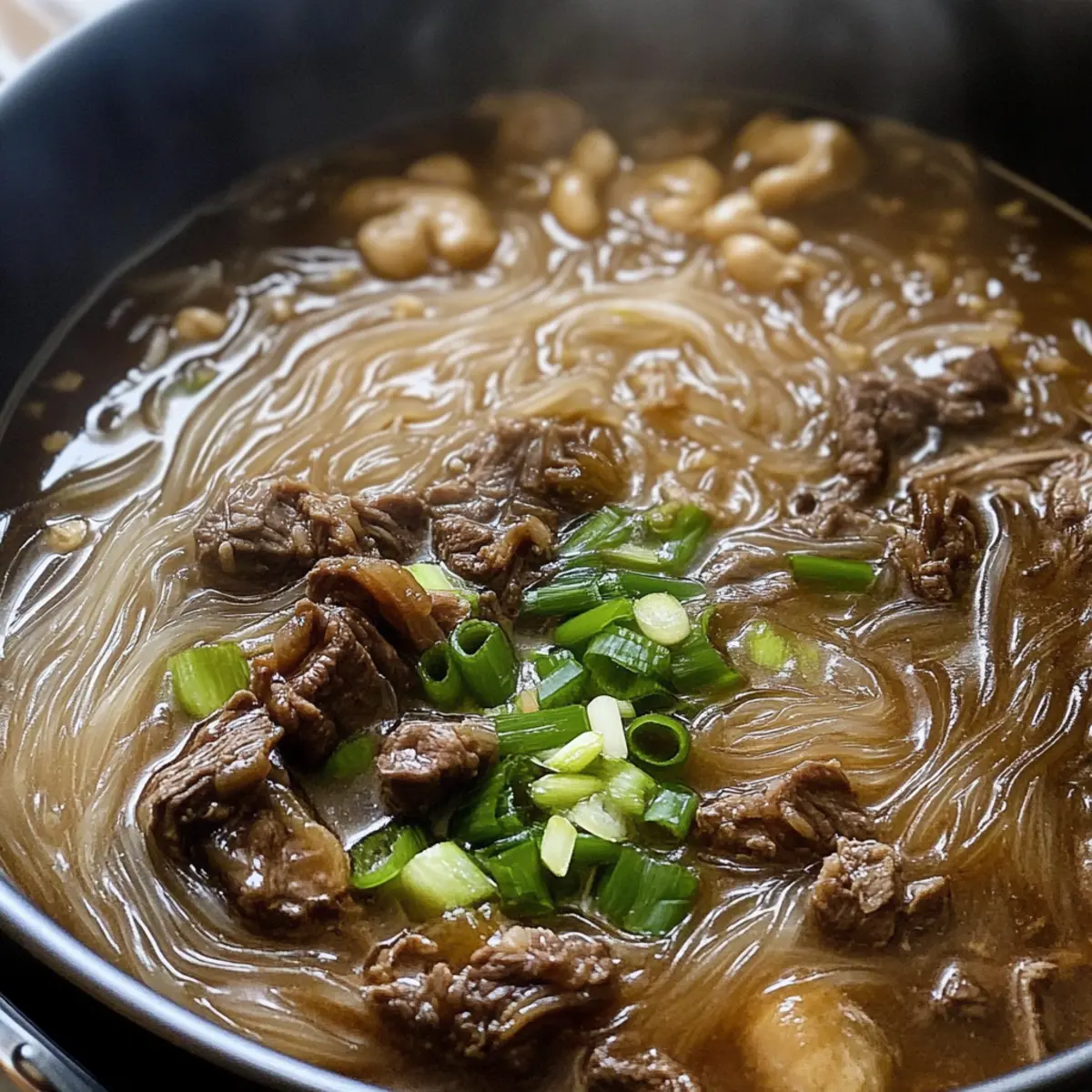
Korean Beef Bulgogi Stew Recipe FAQs
What kind of beef should I use for bulgogi?
Absolutely! For the best flavor in your Korean Beef Bulgogi Stew, use flank steak or sirloin, as they are tender and absorb marinades beautifully. Look for cuts that have good marbling, as this will enhance the flavor in the final dish. If you’re short on time, pre-marinated bulgogi from your local Asian market can also work wonders!
How do I store leftovers?
Very simply! Store any leftover Korean Beef Bulgogi Stew in an airtight container in the refrigerator for up to 3 days. Make sure it cools to room temperature before sealing. When ready to enjoy, gently reheat it on the stove over low heat, stirring occasionally to maintain an even temperature and prevent the glass noodles from overcooking.
Can I freeze the stew?
Yes, indeed! To freeze your Korean Beef Bulgogi Stew, allow it to cool completely before transferring it to a freezer-safe container or heavy-duty zip-top freezer bag. It can be frozen for up to 3 months. When you’re ready to enjoy it, thaw the stew overnight in the refrigerator, then reheat gently on the stove. If the broth seems thick, add a splash of water to regain its consistency.
What if my glass noodles become mushy?
Ah, that’s a common concern! Ensure you soak the sweet potato glass noodles for about 15 minutes until just soft, then drain them. Just before adding them to the stew, test to ensure they have the right chewiness. If you’re reheating leftovers, avoid cooking them too long in the broth; they only need a quick warm-up to maintain their texture.
Can I modify this recipe for dietary restrictions?
Absolutely! This Korean Beef Bulgogi Stew is quite flexible. For gluten-free options, use tamari instead of soy sauce. If you’re catering to a vegetarian or vegan diet, feel free to substitute beef bulgogi with tempeh or tofu marinated in a similar sauce. Just be mindful of nutritional needs if cooking for pets, as onions are not safe for them.
How do I know if my ingredients are fresh?
That’s a great question! When selecting mushrooms, look for firm, dry enoki mushrooms without dark spots or wrinkles. For green onions, choose ones with vibrant green tops and firm white bases. Fresh noodles should be smooth and not sticky; if you see any dark spots or foul smells, steer clear. Enjoy cooking your Korean Beef Bulgogi Stew!
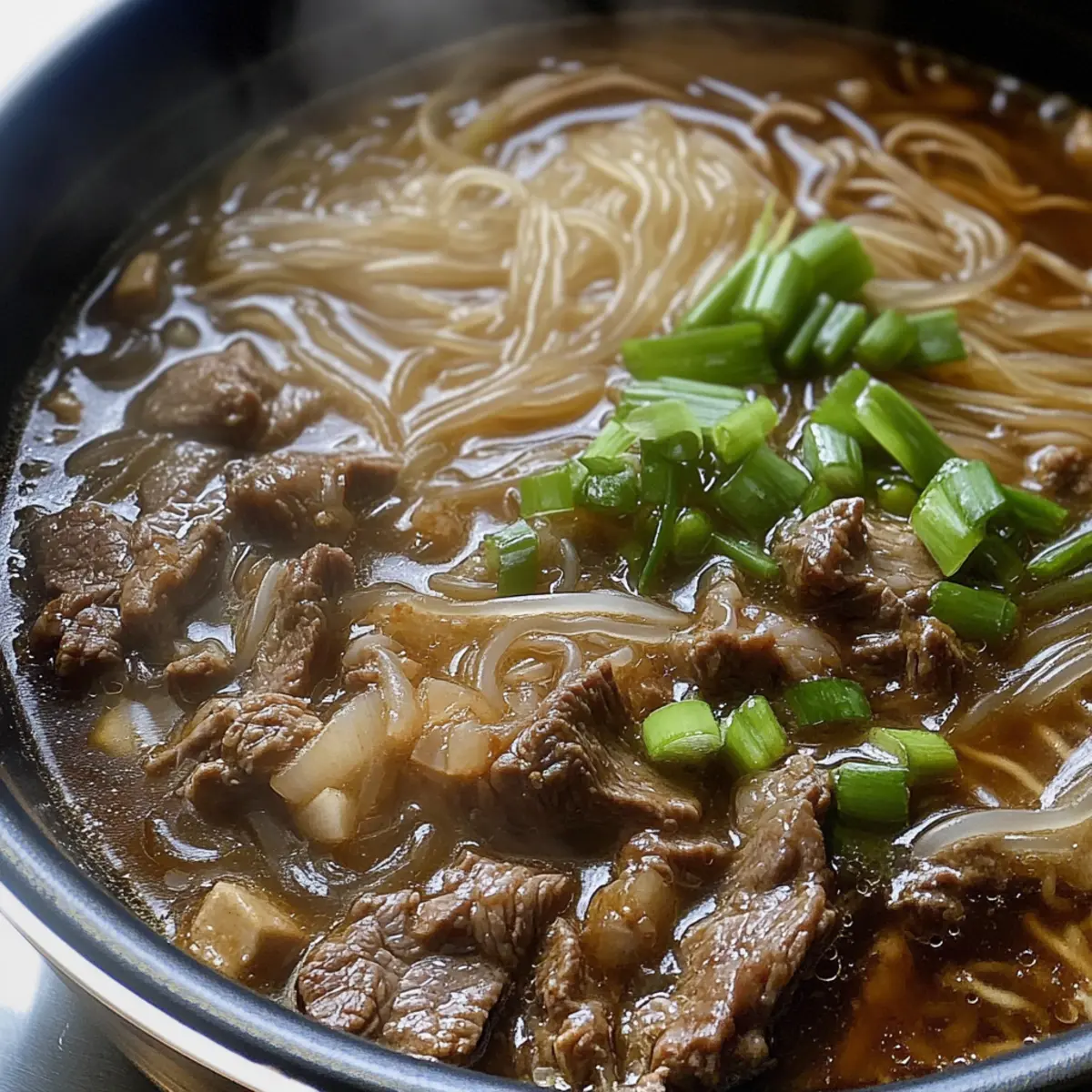
Savory Korean Beef Bulgogi Stew Ready in 30 Minutes
Ingredients
Equipment
Method
- Soak the sweet potato glass noodles in warm water for about 15 minutes. Drain and set aside.
- In a medium pot over medium heat, warm your leftover Korean beef bulgogi for about 3-5 minutes until heated through.
- Stir in 1-2 tablespoons of soy sauce and a teaspoon of sesame oil. Mix well for another minute.
- Pour in 4 cups of water or beef broth, bringing it to a gentle boil over medium-high heat (about 3-4 minutes).
- Add the soaked glass noodles and 1 cup of enoki mushrooms to the pot. Cook for 3-4 minutes until tender.
- Remove from heat and serve hot in bowls, topped with chopped green onions.
Leave a Reply